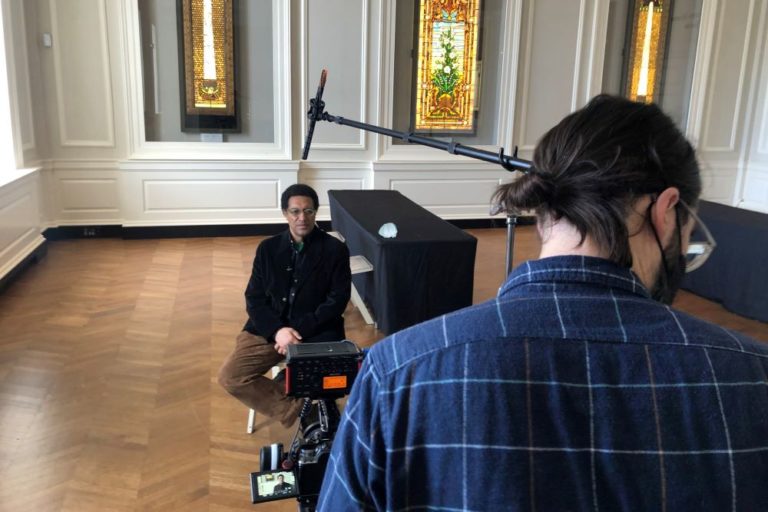
The MSU Film Studies Program completed its inaugural study abroad trip to the Toronto International Film Festival (TIFF) with 12 student filmmakers participating.
Kaveh Askari, Associate Professor and Director of Michigan State University’s Film Studies Program, and Peter Johnston, Associate Professor and Manager of Digital Media and Film Production at MSU, led the week-long program in Ontario, Canada.

“Our first trip blew away our expectations. The students were engaged in absolute cinephilia, and their attitudes were infectious,” Johnston said. “You often take away from a film festival the amount of effort you put in and this group really wasted no effort in experiencing it to the maximum.”
TIFF offers film premieres across a wide range of genres from around the world. Attendees not only got to see the process of premiering and promoting new films but also watch them alongside industry professionals including actors, directors, and producers.
“Our first trip blew away our expectations. The students were engaged in absolute cinephilia, and their attitudes were infectious.”
Peter Johnston, Associate Professor and Manager of Digital Media and Film Production at MSU
“Young scholars can get inspired by films at all levels, from student shorts to debut features to old masters at the top of their craft,” Johnston said. “They also have the chance to meet and talk film with peers at their level and to take advantage of the conference sessions that give real-world advice.”
The students stayed at a nearby hostel that was only a short walk from the box office and main theatres. The study abroad took place Sept. 10-17.
“I have been wanting to run a TIFF program since I took a position at MSU,” Askari said. “A close colleague who works for the festival suggested the idea to me years ago, and when I found myself living within driving distance of Toronto, it made sense to move forward.”
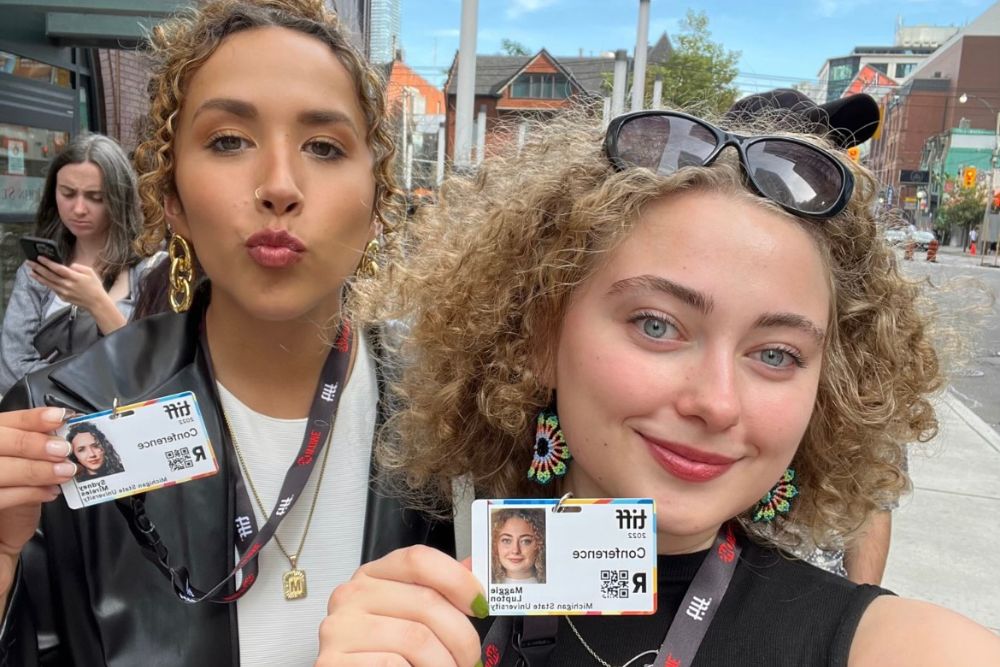
Maggie Lupton, a senior with a double major in Film Studies and Arts and Humanities, and Nick Lyskawa, a junior majoring in Film Studies, participated in the study abroad to indulge their love of film. They also benefitted from this experience in ways that expanded their academic studies.
“I’m currently in the Fiction Filmmaking Capstone in which we are spending the entire year creating a 30-minute short film,” Lupton said. “Watching all of these amazing films provided so much inspiration for that project, and many had similar themes and cinematography for what we are trying to accomplish in class.”
“TIFF opened my eyes to different sides of contemporary cinema, which will prove helpful in my various film-related classes.”
Nick Lyskawa, junior Film Studies major
For Lyskawa, traveling to TIFF gave him firsthand, behind-the-scenes insight into how a film festival is run.
“Considering I’m taking Professor Askari’s Film Festival seminar, going to TIFF directly coincided with one of my classes,” he said. “TIFF opened my eyes to different sides of contemporary cinema, which will prove helpful in my various film-related classes.”
The study abroad program was made up of three class sessions, one before the trip and two after, as well as a combination of small assignments and a final project due in October. For the final project, students choose between a variety of mediums, such as writing, podcast, film, and more, to complete the final project for the class.
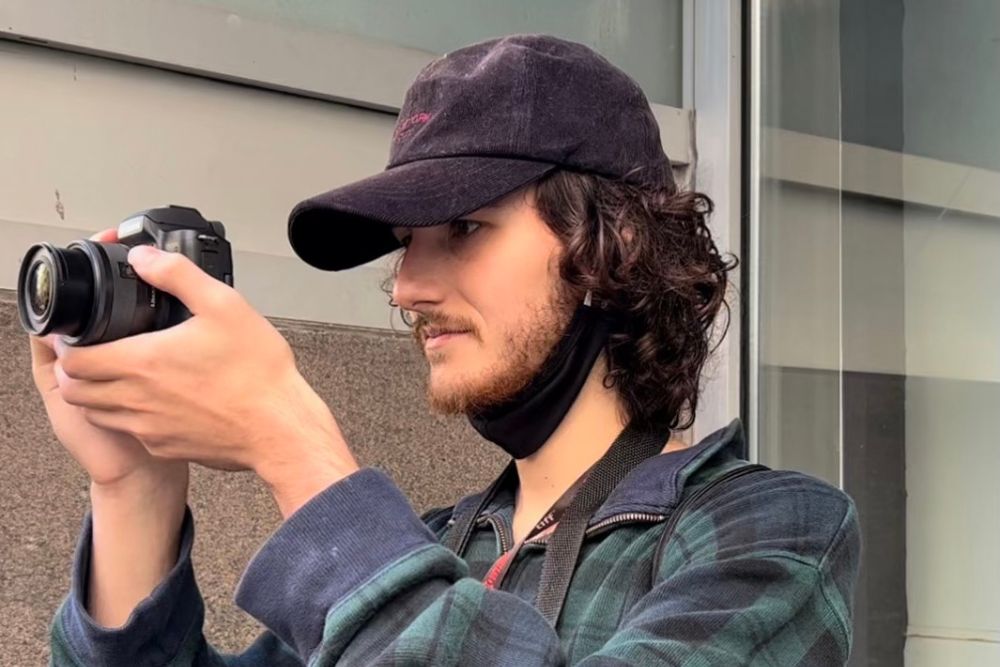
“At TIFF, students have the opportunity to listen to filmmakers talk about the creative process and aspects of production. We also want them to have the experience of immersing themselves in cinema,” Askari said. “The class projects are designed to carry the creative energy generated by this experience of cinephilia over to the work they are doing in the classroom.”
Additionally, the study abroad program encouraged students to return to TIFF beyond their MSU graduation to foster connections between the festival and upcoming professionals in film and television.
“At TIFF, students have the opportunity to listen to filmmakers talk about the creative process and aspects of production. We also want them to have the experience of immersing themselves in cinema.”
Kaveh Askari, Associate Professor and Director of MSU’s Film Studies Program
“During my time abroad, the fact that cinema is more than entertainment had been thoroughly reinforced,” Lyskawa said. “Film can be thought-provoking, life-changing, powerful in its sentimentality, and a source of life. My biggest takeaway from my study abroad experience is that cinema is a magical means of bringing people together.”
Registration for next year’s program starts in Spring 2023 and requires prospective students to fill out an application and submit a short essay answering one of three prompts. Askari and Johnston hope to expand the group from 12 up to 25 students and travel by charter bus to maintain a cohort feeling.
“To the students considering this program, I would say that it is not for the faint of heart. Three screenings a day at minimum is incredibly exhausting and difficult, yet so very worth it,” Lupton said. “If you love movies and are passionate about the medium, go for it. This program is for you.”
Written by Kseniya Lukiy